

New Poles Everywhere
What are these strange-looking installations?
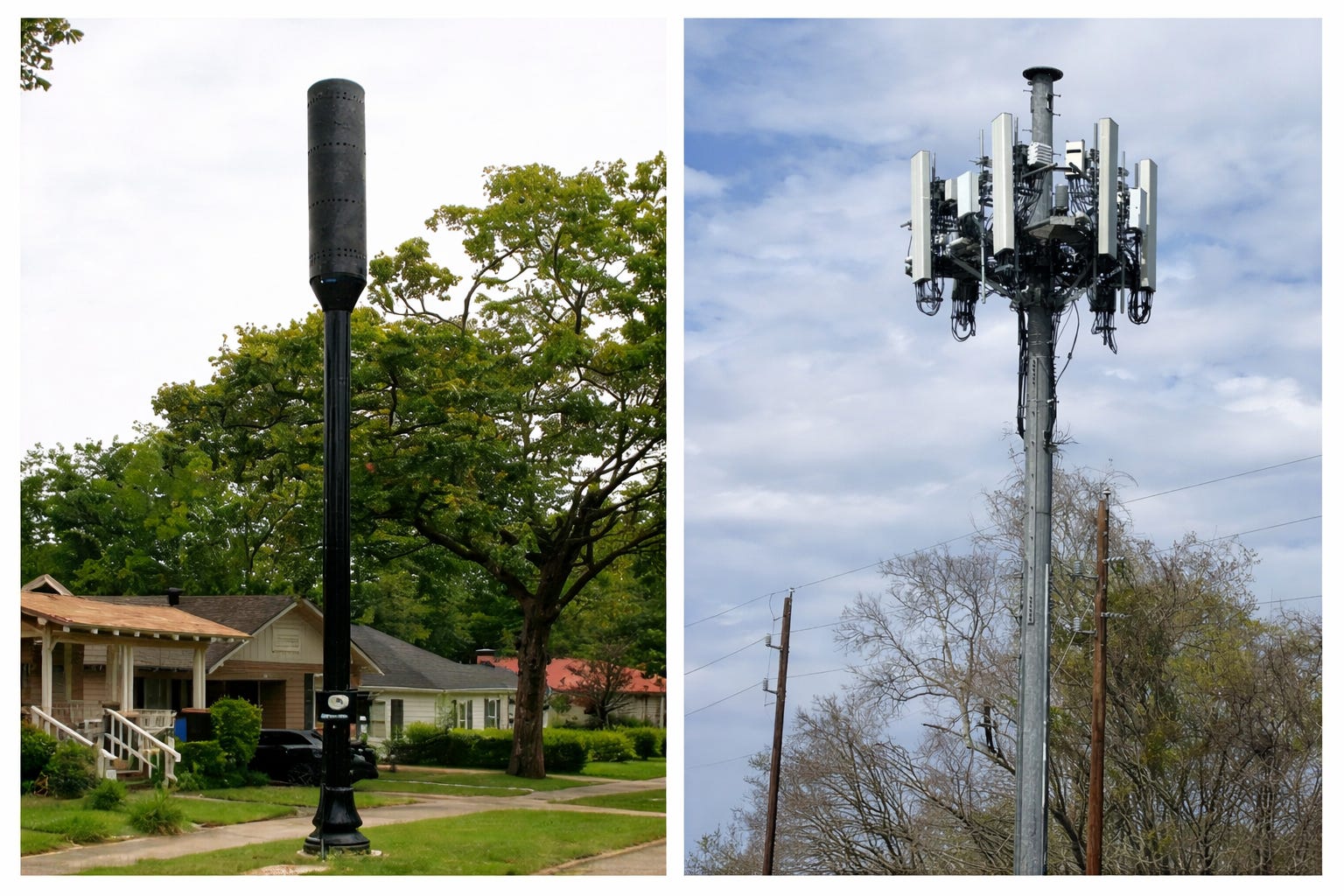
They’re popping up like weeds along our roadways! Have you seen all the new poles popping up around the roads and highways across Conway (and central Arkansas) in the last several months?
First it was those 5G towers in Conway (and also along I-40) that legally must be installed in our right-of-way easements. Many experts say 5G towers emit non-dangerous radiofrequency electromagnetic fields — one kind of non-ionizing radiation similar to radiation from FM radio and microwaves — but Secretary Robert F. Kennedy Jr. is launching a HHS study on electromagnetic radiation and health research “to identify gaps in knowledge … to ensure safety and efficacy.”
Now what?
Popping up like wildflowers, they are! On Salem Road near UCA, I just spotted another couple of new, odd-looking poles with solar panels on top.
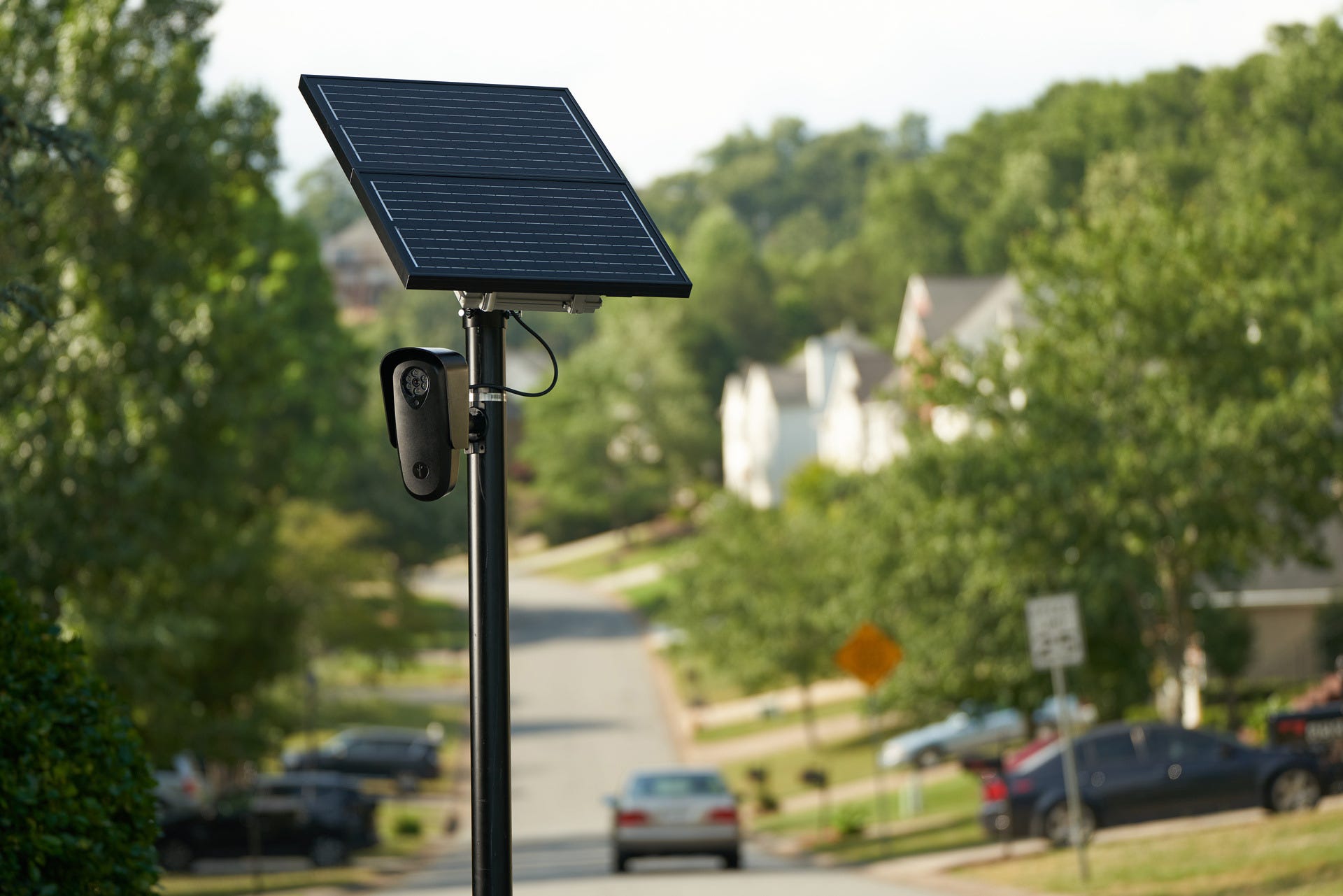
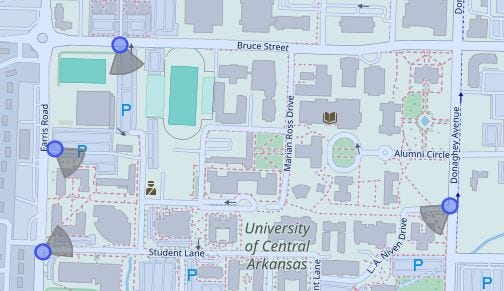
Turns out that UCA employs at least four license plate readers across campus. That’s right — those new-looking black poles with solar panels and little gizmos on top are tracking every single vehicle that passes by, all the time.
Arkansas Law
Our Republican-majority Arkansas Legislature last year passed Act 668 that allows only law enforcement and specific private entities to use automatic license plate readers (ALPRs) and sets data retention periods in an effort to relieve personal privacy concerns.
State, county or municipal law enforcement agencies can use the data to compare with data held by the Office of Motor Vehicles, the Arkansas Crime Information Center, and the National Crime Information Center. Those groups can hold collected data for up to 150 days before it must be deleted unless it is being used as “part of an ongoing investigation.”
Private landowners, leaseholders or commercial businesses may use ALPRs for public safety, “deterring crime,” and monitoring access to private property; those groups must not hold collected data beyond 60 days.
Act 668 also mandated ALPRs to be installed at entrances to weigh stations across Arkansas at Blytheville (I-55), West Memphis, Texarkana along I-40, Ft Smith along I-40, and in Springdale on Highway 49.
Act 668 says that neither law enforcement agencies nor those named private entities can sell, trade, or exchange collected data, unless it’s part of an investigation and that a user must be served a subpoena to “release any captured plate data from a user.”
Public Reports
Per Act 668, groups capturing license plate data must also produce public reports twice yearly about their compliance with and use of license plate readers, including number of plates scanned, places the data was cross-checked, number of confirmed matches, number of matches that did not result in an “alert,” and number of matches that led to an arrest and prosecution.
Act 668 allows only the Attorney General to prosecute violations.
#TheMoreYouKnow #WhadayaSayNow
I have never heard a Councilman question the constitutionality of these.